Deutsch


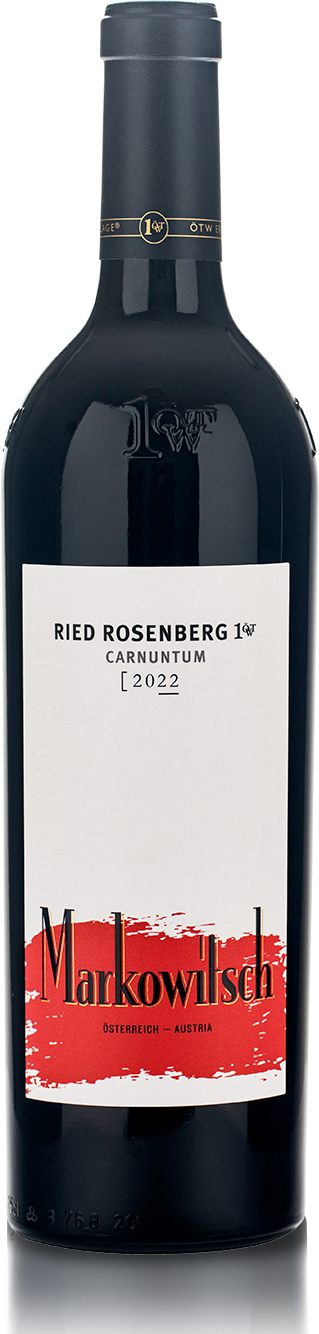
RIED Rosenberg

Located in Göttlesbrunn, Ried Rosenberg takes its name from the wild roses growing along its slopes. This south-facing, sheltered vineyard lies at around 250 metres above sea level and benefits from the cooling influence of the nearby Maria Ellender Forest.
The upper part of the vineyard is covered by a 30 cm layer of pure Danube gravel, while the lower slopes consist of deep, limestone-rich Miocene marine sediments of clay, silt, and sand. These diverse soils give the wine its structure, depth, and remarkable ageing potential.

RIED Rosenberg

Ried Rosenberg in Göttlesbrunn is named after the wild roses growing along its slopes. This sheltered, south-facing vineyard lies at around 250 metres above sea level and is surrounded by the Maria Ellend Forest, which provides a cooling influence.
The upper part of the vineyard is covered by a 30 cm layer of pure Danube gravel, while the lower slopes are dominated by deep, limestone-rich Miocene marine sediments of clay, silt, and sand. This unique combination of soils gives the wine its structure, depth, and exceptional ageing potential.
- site & soil loam, limestone, sand und Danube gravel
- harvest end of September to beginning October hand-selected in multiple passes
- fermentation 14-20 days spontaneous fermentation on the skins at 30-32°C in wooden vats, followed by malolactic fermentation in barriques
- élevage 20 months in french oak barriques of various sizes
- alcohol 14.0%vol
- residual sugar 0.9g/l
- acidity 5.9g/l
- food pairing the wine for holiday feasting: wild game, steaks, stews of dark meat. Anything with concentration and power


WILD ROSES grow on the hillsides, giving their name to this site, surrounded by forest at an elevation of 250m. Here we cultivate 4.8 hectares of vineyard, which benefit from the cooler location. The subsoil is composed of sediments from the primordial sea, with clay, limestone & various types of sand, while the surface layer features a thick layer of Danube gravels, some 30–40 cm. The nature of the soil, of course, changes a bit up and down the slope. In the uppermost portion, Rosenberg is rather meagre and gravelly. There, we have planted Merlot & Blaufränkisch. Farther downhill, the soil becomes deeper with more clay, and Zweigelt gives best results.